
Gameplay guide
The Blood of Dawnwalker Gameplay Explained
How Dawnwalker's 30-day narrative sandbox, day and night forms, quests, combat, exploration, and progression work.
On this page 8 sections
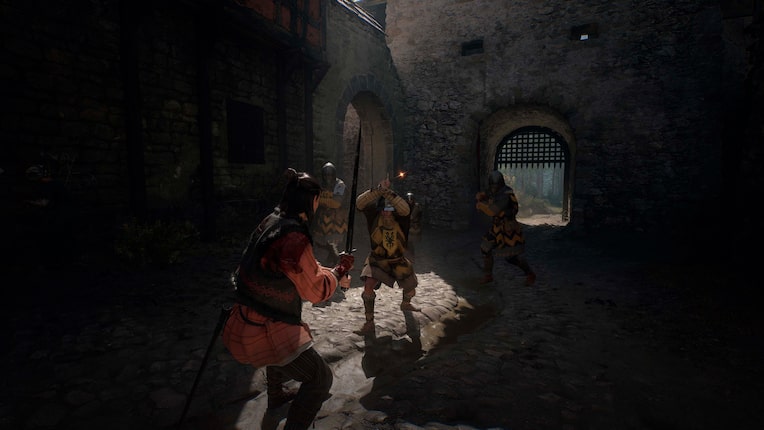
Official gameplay screenshot showing Coen's human-form combat in daylight. © Rebel Wolves / Bandai Namco Entertainment. View media credits
Explore Vale Sangora without a real-time countdown, choose which story threads deserve a limited piece of Coen's 30-day calendar, then solve them as a human by day or a vampire by night through conversation, investigation, traversal, and close-range combat.
What kind of game is The Blood of Dawnwalker?
The Blood of Dawnwalker is a single-player, open-world dark fantasy action RPG. Its defining system is not simply that Coen becomes a vampire at night. The game joins three decisions together: how you spend limited narrative time, which story threads you pursue, and whether you approach a situation with human or vampiric tools.
That makes the game less like a checklist of “main quests” and “side quests.” The developers describe it as a narrative sandbox: you have an urgent goal, but you choose the route, preparation, alliances, and conflicts that form your version of the story.
Brencis plans to sacrifice them after 30 in-game days and nights.
Walking, observing, and searching the world do not consume campaign time by themselves.
Each form has different magic, traversal, combat tools, and possible routes.
Use automatic attack and block directions, or take manual control for precise parries and ripostes.
What do you actually do? The core gameplay loop
One useful way to understand Dawnwalker is to follow a single decision from discovery to consequence:
Search settlements, forests, ruins, caves, and roads without spending campaign time.
Talk to people, follow environmental clues, or investigate an activity marker.
An hourglass warns when advancing an activity will spend one or more narrative segments.
Attempt the problem by day as a human or return at night with vampire abilities.
Investigate, negotiate, use magic, find another route, fight, or leave the thread alone.
The world and its characters can react to what Coen did, delayed, or ignored.
The important point is that exploration gives you information; committing to selected actions spends the scarce resource. You can take your time deciding, but you cannot fit every narrative path into one run.
How does the 30-day time system work?
The clock is a story resource, not a timer counting down while the controller is in your hands. Bandai Namco says time advances when you complete or progress selected goals, and the interface uses hourglass icons to show the cost before you commit.
The launch build divides every daytime period into eight segments and every night into another eight, for 16 segments per complete cycle. Coen can wander, listen, fight ordinary enemies, inspect the world, and use fast travel without paying narrative time; marked quest and activity choices consume the displayed number of segments.
You can stop and explore: opening the map, walking through Vale Sangora, looking for clues, or learning the terrain does not automatically burn through the 30-day campaign. The pressure comes from choosing which meaningful activities to advance.
There are more possible stories than one calendar can hold. That is intentional: the system asks whether helping one person, training, gathering information, or confronting an enemy is worth the time another opportunity might lose.
The complete 30-day time-limit guide explains which actions advance the calendar, which actions are free, and how to plan a run without treating exploration like a real-time countdown.
How different are human and vampire gameplay?
Day and night are two toolsets, not just a visual filter.
Coen uses grounded weapon combat and spells channelled through runic scars. Magic can support fighting, traversal, and investigation.
Coen gains vampiric attacks, heightened senses, rooftop movement, wall-scaling abilities, and feeding choices.
The official gameplay reveal showed a cathedral clue that Coen could see during the day but could not physically reach until returning at night. Shadowstep, Clawride, and Planeshift were demonstrated as vampire traversal abilities for crossing rooftops and scaling structures.
Night also introduces hunger. Coen can drink from people, enemies, animals, or other creatures, and the reveal showed that the player may decide how much to take from a victim. Feeding is therefore both a resource decision and a character choice, not merely a healing animation.
Human magic follows different rules. Coen's runic scars act as a gateway for ritual spells during the day, while those scars seal at night and his vampiric form draws on supernatural abilities instead. One confirmed spell, Compel Soul, can gather information from the dead, showing that magic is not limited to damage.
What does “narrative sandbox” mean?
Rebel Wolves does not use a conventional hierarchy where one golden “main quest” matters and every other story waits forever. The overarching problem is clear—Coen's family and Brencis—but the route through Vale Sangora is assembled from the threads you choose to pursue.
Official demonstrations show that you can prepare, uncover information, help people, build relationships, eliminate enemies, postpone a confrontation, or attempt to reach Brencis much earlier than a normal RPG would allow. Choosing not to act can matter just as much as completing a task.
This does not mean the game is procedurally generated or that every imaginable action is supported. It means authored quests and characters are arranged so that timing, order, form, and player decisions can create different routes and consequences.
Why replay it? The developers intentionally provide more time-consuming story content than one campaign can contain. A later playthrough can spend its limited calendar on different people, preparations, and outcomes.
For one confirmed example of a quieter choice using the same calendar, see the romance options guide.
How does combat work?
Combat is close-range and built around reading an opponent, managing position, and choosing when to attack, block, parry, or use an ability. The current official terminology describes two ways to control the same combat system:
- Omniattack and omniblock: Coen automatically chooses the attack or block direction at the push of a button. This is the more approachable option.
- Directional combat: the player reads incoming directions and manually responds for more precise parries, ripostes, and tactical control.
The directional layer is optional, not a requirement for simply making Coen swing a sword. Players who learn it are rewarded for timing and precision, while players focused on story can use the adaptive controls.
Coen's arsenal is centred on melee combat. Bandai Namco has confirmed short swords, long swords, great swords, axes, other found weapons, bare-fist attacks, human magic, and vampire claws. An earlier official reveal says Coen does not use bows or crossbows, although some spells and vampiric abilities can damage or close distance.
Successful attacks, blocks, and parries can build Activation Charges for active abilities. Skill books unlock new techniques, while passive upgrades support styles such as defence and counterattacks, mobility, or aggression.
How do exploration and progression work?
Vale Sangora includes settlements, forests, swamps, mountains, caves, ruins, camps, monster nests, and haunted locations. The whole map is visible from the beginning, but important activities are not fully labelled until Coen discovers clues, hears information, or reaches the area.
The official gameplay recap confirms fast travel through the world map and says Coen does not have a horse. Vampire traversal supplies a different kind of mobility at night, while the world still rewards ordinary observation and investigation during the day.
The progression system has human, vampire, and shared branches. Swordmastery ability manuals have fixed quest, camp, and trainer sources, while Witchcraft manuals come from Ancient Circles, haunted locations, character quests, and specialist merchants. Named vrakhiri blood can unlock unique vampire abilities without a skill-point purchase. Some Shrine upgrades consume time, so growth is not only about collecting experience and clearing every icon.
For fixed unlock locations, use the Swordmastery manual guide, Witchcraft manual guide, and vrakhiri blood ability guide.
Gameplay FAQ
Is The Blood of Dawnwalker multiplayer?
No multiplayer mode has been announced. Official descriptions present it as a single-player action RPG.
Does the 30-day limit run while I explore?
No. Free exploration does not advance the narrative clock. Selected quest steps and meaningful activities show their time cost before progressing.
Can I play only as a human or only as a vampire?
The official gameplay recap says it is possible to focus on either side, but doing so means missing a large part of the game. Day and night are designed as complementary loops.
Is there stealth gameplay?
Trailers demonstrate alternate routes, night infiltration, rooftop traversal, and ways to avoid a direct frontal approach. The official sources checked here do not define Dawnwalker as a dedicated stealth game or confirm a complete stealth build, so this guide does not promise one.
Is the combat turn-based?
No. It is real-time action combat with adaptive controls, optional directional inputs, stamina, parries, active abilities, magic, swords, and vampire claws.
Where can I play it?
The confirmed platforms are PC, PS5, and Xbox Series X|S. Use the PC guide, PS5 guide, or Xbox guide for platform-specific information. The release guide tracks the September 3, 2026 launch.
This gameplay guide was refreshed on September 4, 2026 with launch-build time, progression, combat, and exploration details. Platform performance is kept in the dedicated PC, PS5, and Xbox guides.
Continue by topic
Related guides
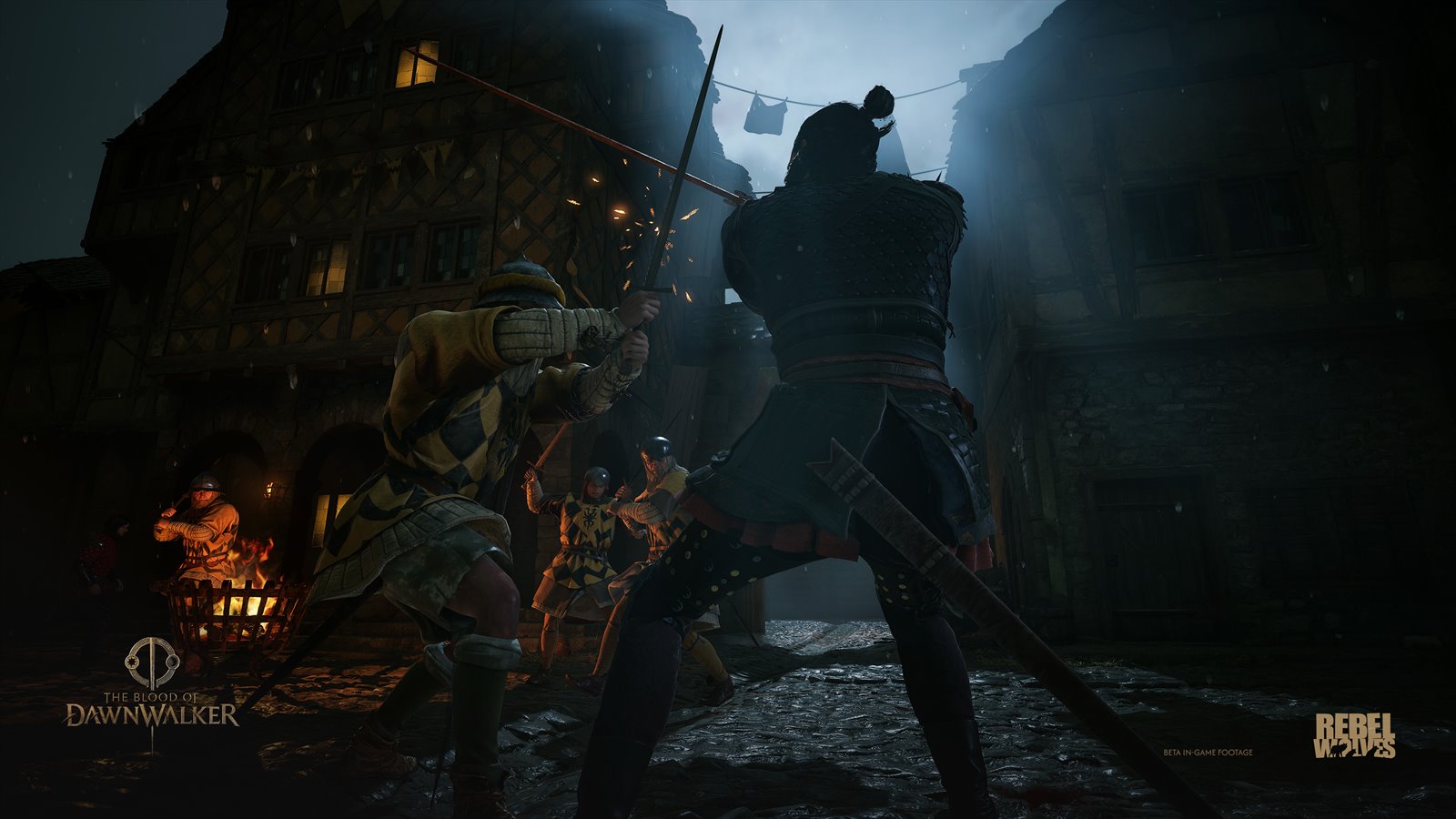
Dawnwalker Beginner Guide: Best First-Hour Tips
Practical launch tips for Dawnwalker's 30-day clock, prologue route, Perfect Block combat, day/night builds, blood healing, skills, and missable quests.
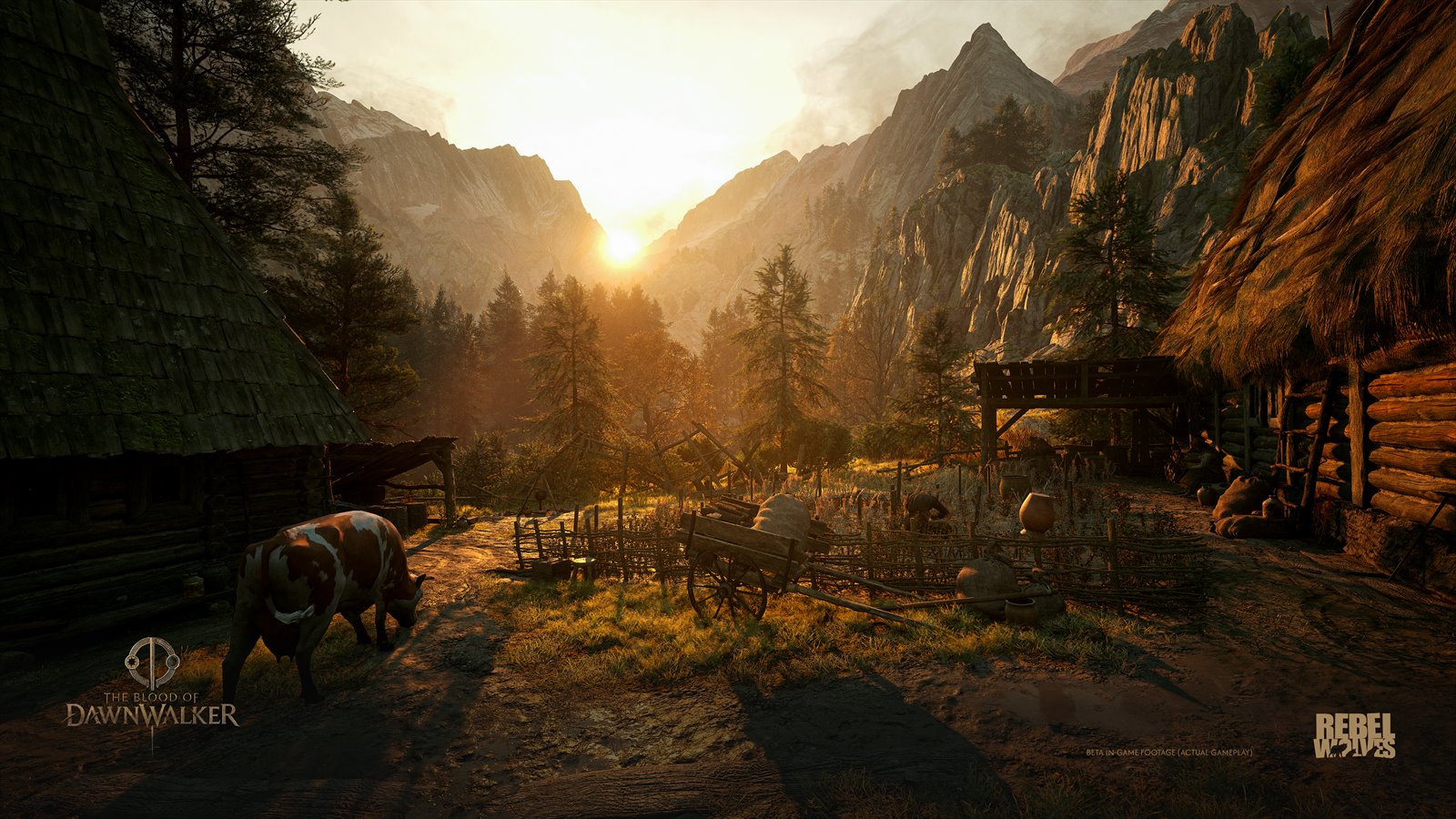
The Blood of Dawnwalker Time Limit Explained
How the 30-day time system works, what advances the clock, whether exploration costs time, and why one run cannot cover every story.

Dawnwalker Characters: Official Cast Guide
Meet the eight officially profiled Dawnwalker characters and the three confirmed romance routes: Anca, Crake (Marat), and Lacra.